Two Wines Named Orange, A Necessary Distinction
The term 'orange wine' has become fashionable in the natural wine world over the last decade, referring to white wines made with extended skin contact that gives the wine an amber or orange hue. But this modern trend obscures a much older and completely distinct tradition: Spain's Vino de Naranja.
Spanish orange wine is not a skin-contact white wine. It is a traditional Andalusian wine made by infusing a base white wine with the peel of bitter Seville oranges (Citrus aurantium), the same oranges that line the streets of Seville and are used to make British-style marmalade. The result is a uniquely aromatic, semi-sweet wine with an intensely citrusy character that has been produced along Spain's Mediterranean and Atlantic coasts for over two centuries.
The History of Vino de Naranja in Spain
The Vino de Naranja tradition is most strongly associated with Huelva in Andalusia, where it has been produced since the early 19th century, originally as a way to add complexity to local white wines using the abundant bitter orange trees that grew throughout the region. The bitter Seville orange, virtually inedible fresh but extraordinarily aromatic, was a natural complement to white wine, lending both its essential oils and its characteristic citrus bitterness.
Over time, Vino de Naranja spread along Spain's Mediterranean coast, with each region adapting the style to local grapes and techniques. Bodegas Sendra González in Altea, on the Valencia coast, represents a distinctly Mediterranean interpretation of this tradition, lighter, brighter, and more aromatic than the heavier Andalusian styles, reflecting the gentle coastal terroir of the region.
Bodegas Sendra González: A Family Tradition in Altea
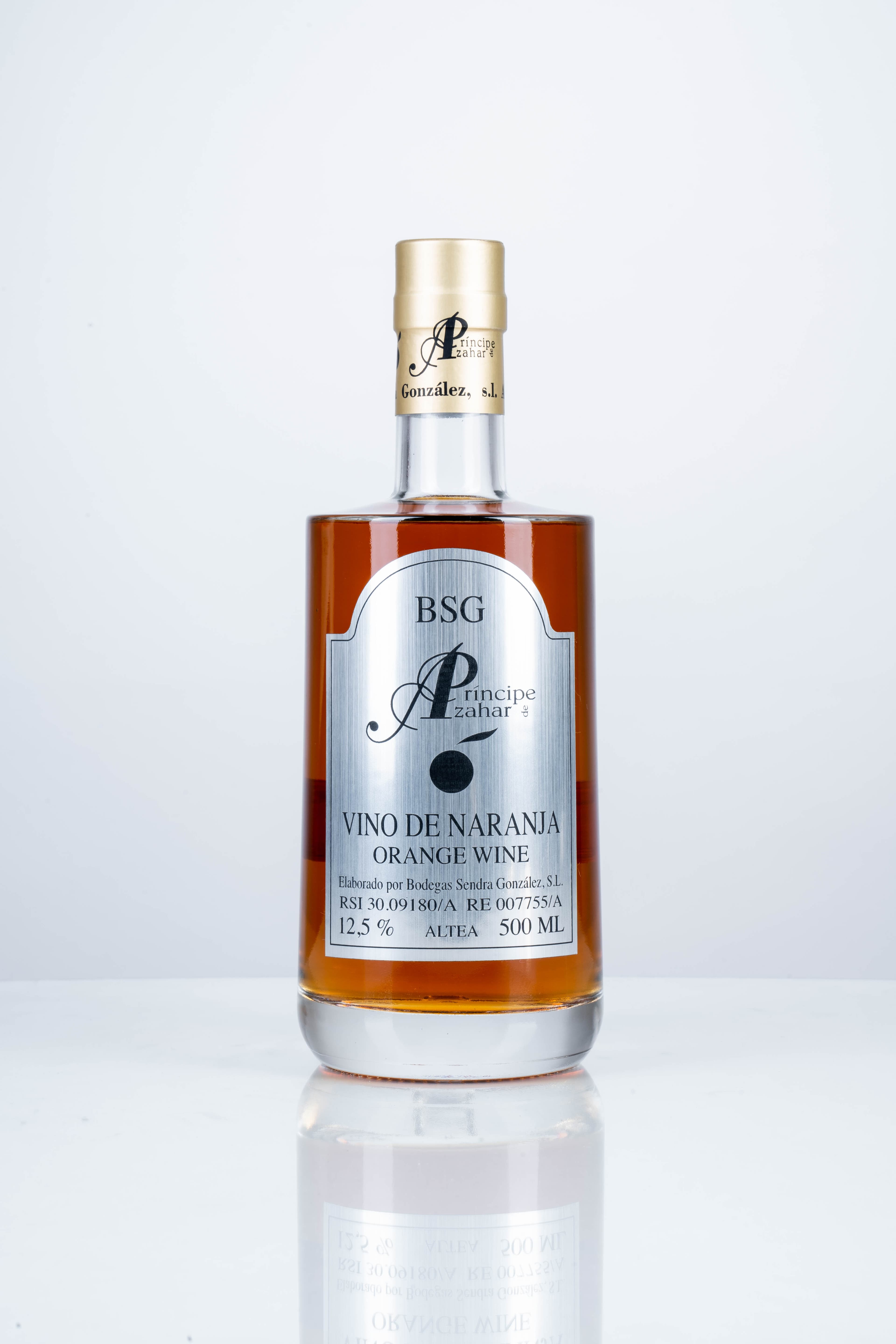
Bodegas Sendra González has produced wine in Altea for generations, drawing on the family's deep roots in the agricultural heritage of the Valencia coast. The bodega's Príncipe Azahar Vino de Naranja is made from locally grown white grapes, fermented traditionally, and then infused with carefully selected bitter orange peel.
The resulting wine, presented in a distinctive 500ml bottle, is golden in color, with an intensely citrusy nose of bitter orange, white flowers, and honey. On the palate, it is semi-sweet with a clean bitter finish from the orange pith, and a lingering warmth from its 12.5% alcohol. It is best served well chilled as an aperitif.
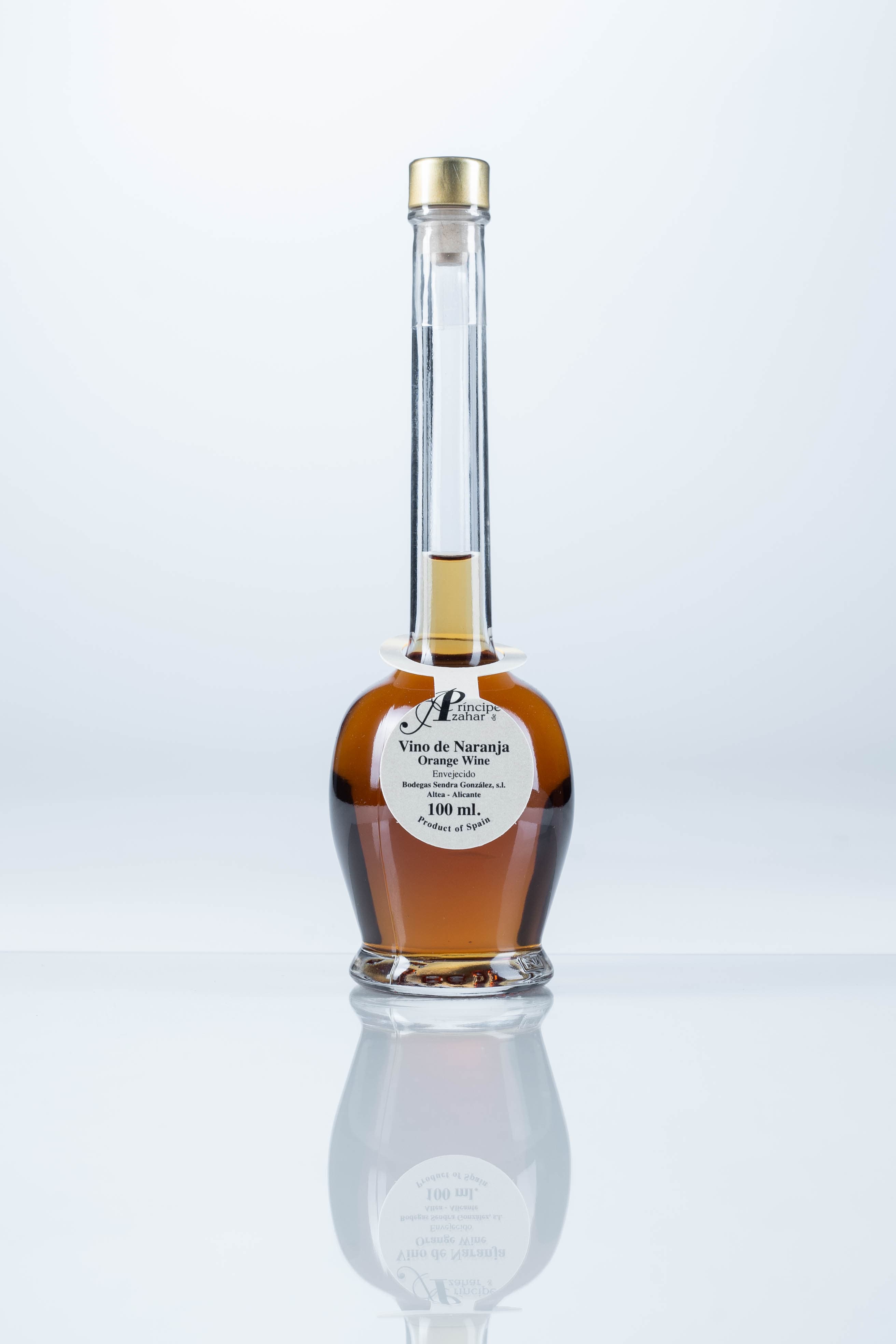
For those wanting a taste before committing to a full bottle, the 100ml miniature, Vino Naranja 100ml, offers the identical wine in an elegantly portable format, ideal for gift collections, tasting flights, and hospitality presentations.
How to Drink Vino de Naranja: Serving and Pairing
Serve Príncipe Azahar's Vino de Naranja at 8–10°C, well chilled but not ice-cold. It is exceptional before a meal as an aperitif, paired with salted almonds, jamón ibérico, and olives. At the table, it pairs beautifully with grilled fish and shellfish, light seafood tapas, and mild aged cheeses.
Its citrus-forward character also makes it a natural companion for dishes that incorporate lemon or orange, a piece of Lemon Salt-finished fish, for example, or a seafood dish finished with Soto & Segovia Lemon Olive Oil. The wine's natural sweetness and bitter finish create a sophisticated balance that works equally well as a dessert wine with fruit-based pastries.
For gifting, the combination of a 500ml bottle of Vino de Naranja with a selection of Princesa Azahar salts and Príncipe Azahar olive oils creates an exceptional Spanish pantry gift, a complete sensory story of Altea's culinary traditions.
Frequently Asked Questions
What is orange wine?
There are two distinct styles called 'orange wine'. The modern style refers to white wine made with extended skin contact, giving it an amber or orange color. The traditional Spanish Vino de Naranja is white wine infused with the peel of bitter Seville oranges, creating a distinctly citrusy, aromatic fortified wine. Bodegas Sendra González produces the traditional Spanish style.
How should Spanish orange wine be served?
Serve Vino de Naranja well chilled, around 8–10°C (46–50°F). It is exceptional as an aperitif before a meal, as an accompaniment to tapas and seafood, or served alongside cheese and charcuterie boards. The miniature 100ml format makes it an elegant portion for a single glass or tasting experience.
Is orange wine sweet?
Bodegas Sendra González's Vino de Naranja is semi-sweet, it has a natural citrus sweetness from the orange peel but is balanced by the bitter pith and the acidity of the base wine, creating a complex, aromatic drink that is not cloying. It is 12.5% alcohol by volume.
What food pairs with Spanish orange wine?
Spanish Vino de Naranja pairs beautifully with seafood (particularly grilled fish and shellfish), Iberian charcuterie, aged cheeses, and Spanish tapas. Its citrus character also makes it a natural companion for mild spice and dishes with lemon or citrus elements.